Jebel Faya Sharjah | UNESCO Site & 210,000 Years of Human History
A journey through the desert in search of our origins.

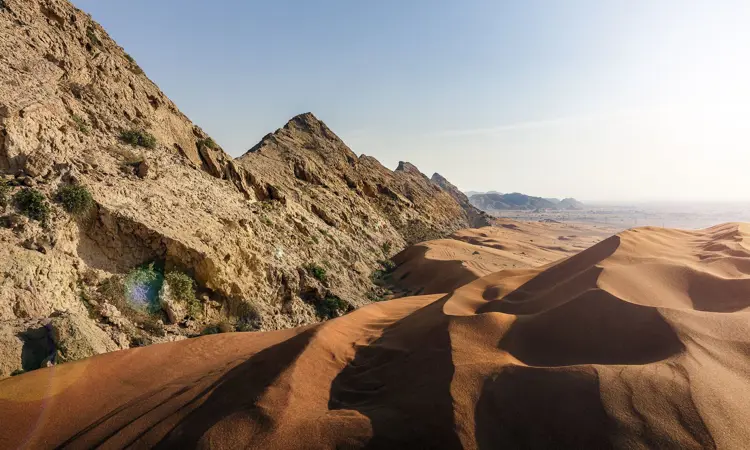
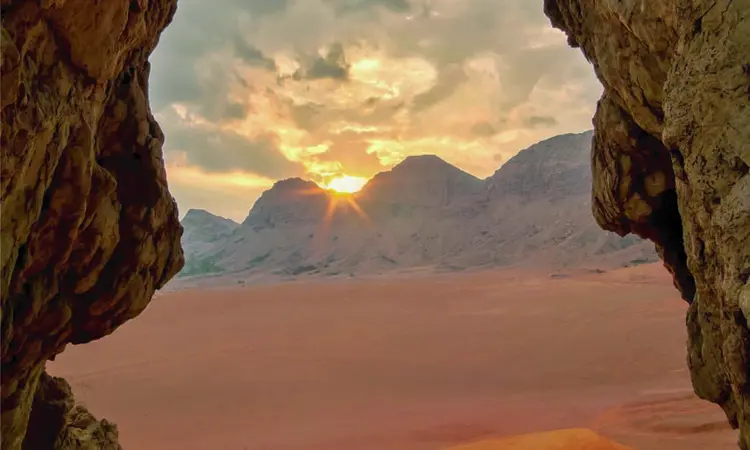
Rising from the golden sands of Sharjah’s central region, Jebel Faya stands as a silent witness to more than 210,000 years of human history. Recognised as part of the Sharjah Cultural Landscape of the Central Region — a UNESCO World Heritage Site, this desert ridge preserves some of the earliest evidence of human life beyond Africa.

Across the Faya range, archaeological discoveries have revealed ancient stone tools and traces of early innovation, offering insight into the resilience and adaptability of early humans. These findings have reshaped previous understandings of human development in the Arabian Peninsula, demonstrating that the region was not merely a passage, but a place of sustained habitation.

Spanning from the Middle to the Late Stone Age—between 210,000 and 6,000 years ago—the Faya Palaeolandscape provides a continuous archaeological and environmental record. Evidence across the site supports the theory of a southern migration route from Africa into Arabia, contributing to a shift away from earlier theories that focused on a northern route.

Early human communities adapted to a desert environment marked by shifting climatic conditions, from extreme dryness to periods of increased moisture. When the first humans arrived in Faya, the landscape was greener and more vibrant, with water flowing through wadi channels and supporting plant and animal life. Even in later periods of hyper-arid conditions, the area continued to show evidence of human presence.

Today, the site reflects a complete fossil and archaeological record, representing 18 phases of prehistoric occupation across a mountain range extending approximately 20 kilometres. More than 35,000 lithic artefacts have been uncovered, supported by over 50 peer-reviewed scientific publications and more than 52 years of research.

With seven excavated archaeological sites and well-documented evidence of frequent habitation, Jebel Faya stands as an exceptional testimony to cultural and societal evolution under extreme environmental conditions, and as an outstanding example of a Stone Age desert landscape illustrating a significant stage in human history.

How to get there

Jebel Faya is located in Al Faya near Al Madam in the central region of Sharjah, approximately 50 minutes east of Sharjah city. The site lies between the dunes of the Rub‘ al-Khali Desert to the west and the Al Madam Plain to the east, along the foothills of the Hajar Mountains, and can be accessed by road from surrounding areas.

Jebel Faya
More like this

Resistance Monument

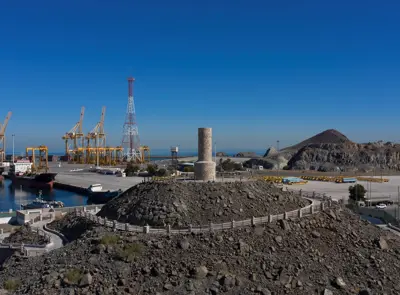
The Resistance Monument highlights the city’s history and tell the story of Khorfakkan’s people who sacrificed their lives to protect their city during the invasion.

Al Rabi Tower

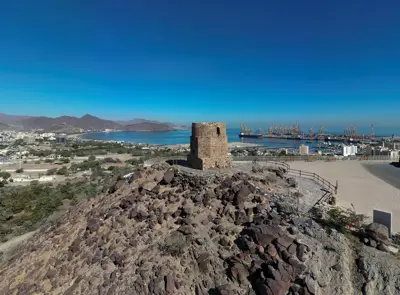
From the outskirts of this ancient city, from this place and at a height of 395 meters above sea level, you will realize the importance of this defensive tower, which, along with the towers scattered in Khorfakkan, formed an integrated defense chain.

Al Adwani Tower

Follow a winding, well-lit path up to Al Adwani Tower to take in the town’s beautiful views.

Hisn Khorfakkan

When you pass through the doors into this museum, the ancient history of Khorfakkan comes alive.

Najd Al Maqsar Village

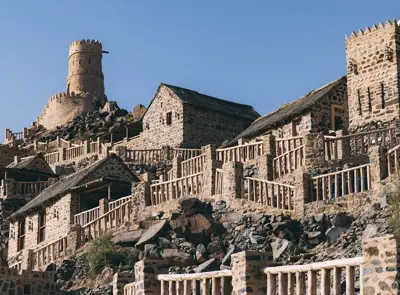
Hike up the Hajar mountains to explore ancient village life, palm frond houses and palm and date tree farms watered by an age-old irrigation system

Salem Al Mutawa Mosque

Once used as the image for the 5AED note, this is one of the oldest mosques in the city, fames for its unique architecture.

Khor Kalba Fort

The fort displays various holdings and findings, which were found through excavations in the area. Some of these artefacts date back to the eighteenth century BC, and some are even older.

Al Dhaid Fort

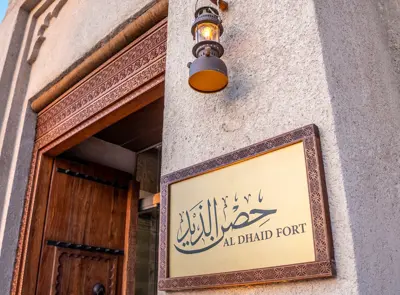
This historical fortress is a symbol of the legacy and characteristics of the people of the region and circumstances they sustained over time.

Sharjah Heritage Museum

Dedicated to highlighting Sharjah’s authentic heritage, the rich culture of Emirati people and Sharjah residents over the past few decades.

Majlis Al Midfa

Relive past gatherings in a historic square with a unique landmark.

Bait Sheikh Saeed Bin Hamad Al Qasimi

Located on the East Coast, the Bait is considered one of the most beautiful heritage houses and is abound with traditional Islamic collectibles.

Bait Khalid Bin Ibrahim

Bait Khalid Bin Ibrahim dates back to the 19th-century and was the former residence of pearl merchant Khalid bin Ibrahim Al Yousef.

Bait Al Naboodah Museum

Today this charming habitat is a signature of timeless traditions and thoughtful architectural insights of the forefather

Sharjah Archaeology Museum

A Sharjah museum with an expansive collection of relics from important archeological sites.

Fili Fort

A restored fort in Fili where caravan routes, falaj heritage, and traditional Emirati life are brought vividly to life.

Al Mudharsa Tower

A restored watchtower revealing the story of oasis life, agriculture, and traditional defence.

Shees Heritage Museum and Library

Through a curated collection of traditional artefacts, tools, and exhibits, the museum reflects aspects of Emirati life across generations, providing insight into the customs, practices, and daily experiences that have shaped the region.

Dr. Sultan Al-Qasimi Centre

Set in the manicured grounds of Sharjah’s university district, this centre houses a rich collection of centuries-old maps, manuscripts and books.

Sharjah Museum of Islamic Civilization

Holding thousands of rare and important Islamic artifacts, you can admire the timeless achievements of Islamic civilization and its universality.
Souk Sharq

Souk Sharq

With a wealth of tourist places in Sharjah covering all types of interests and activities, you can pack your itinerary with extraordinary experiences.

Souq Al Shanasiyah

One of the oldest souks in the region, named after the state of Shanas merchants who used to populate the souk, now reconstructed for new experiences.

Souq Al Arsah

The oldest marketplace in the history of UAE.

Keep Exploring